
Introduction
In the drying section of a multilayer board machine, efficient removal of evaporated moisture is essential for stable drying and good board quality. One of the most important systems that supports this process is the Hood and ventilation system.
During drying, water evaporates from the paperboard sheet and creates humid air pockets between dryer cylinders. If this humid air is not removed properly, it can significantly reduce drying efficiency and cause operational problems. The Hood and ventilation system is designed to solve this issue.
What is a Pocket in the Dryer Section?
In the dryer section, cylinders are arranged in top and bottom rows. The space formed between two adjacent dryer cylinders and the dryer fabric is called a pocket.
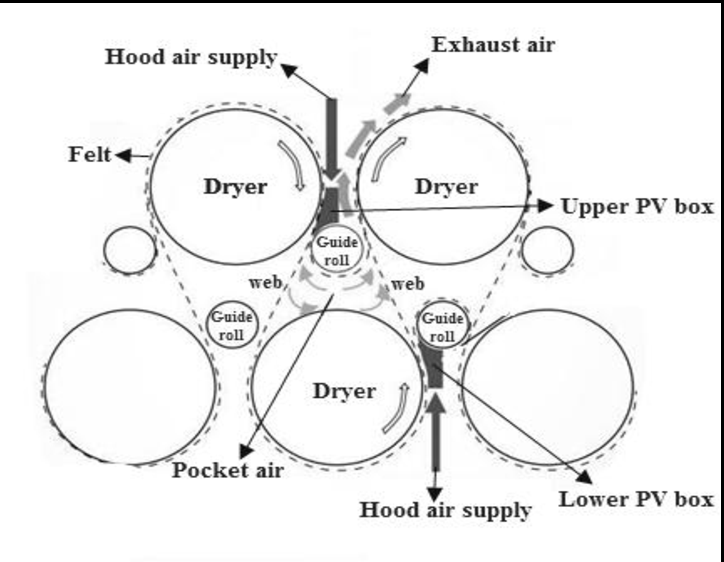
During the drying process:
- Water evaporates from the sheet.
- Moist air accumulates in the pocket.
- Humidity increases around the sheet.
“Without proper ventilation, this humid air layer reduces the evaporation rate and affects drying performance.”
Purpose of the Hood and Ventilation System
The Hood and ventilation system is designed to remove humid air and replace it with fresh hot air.
Its main objectives include:
- Improve Drying Efficiency: Removing humid air increases the evaporation rate of water from the sheet.
- Prevent Sheet Fluttering: Proper air flow stabilizes the sheet and prevents fluttering at high machine speeds.
- Improve Moisture Profile: Balanced ventilation helps achieve uniform moisture across the sheet.
- Increase Machine Speed: Efficient ventilation allows higher machine speeds without drying limitations.
- Reduce Energy Consumption: Better evaporation improves overall thermal efficiency of the drying section.
Working Principle of Hood and Ventilation
The Hood ventilation system works by blowing controlled air into the pocket area and removing humid air through exhaust systems.
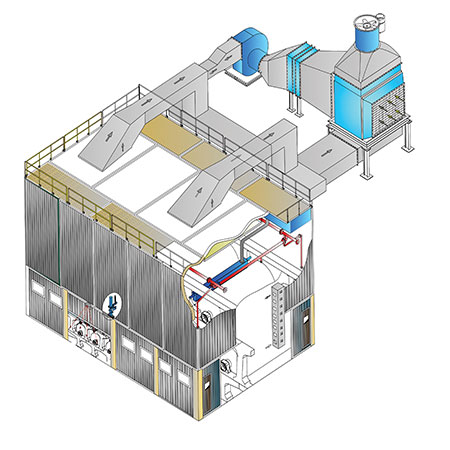
The process works as follows:
- Heated air is supplied into the pocket through blow boxes or nozzles.
- The air mixes with humid air generated from the sheet.
- The humid air is removed by the dryer hood exhaust system.
- Fresh air replaces the humid air, improving evaporation.
“This continuous air exchange maintains a low humidity environment around the sheet, which enhances drying efficiency.”
Components of a Hood Ventilation System
Several components work together to maintain effective ventilation.
- Pocket Ventilators
Pocket ventilators are devices installed near the pockets that direct high-velocity air toward the sheet and dryer fabric.
Their functions include:
- Breaking the humid boundary layer
- Improving air circulation
- Enhancing evaporation
- Blow Boxes
Blow boxes supply heated air into the pocket area.
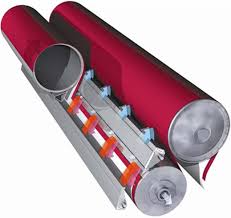
They create controlled air jets that:
- Stabilize the sheet
- Improve moisture removal
- Prevent sheet flutter
- Air Nozzles
Air nozzles direct high-speed air jets toward specific areas of the sheet.
These jets help remove moist air and improve drying conditions.
- Dryer Hood System
The dryer hood works together with pocket ventilation by removing humid air through exhaust fans.
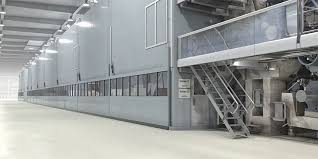
A properly balanced hood system ensures:
- Controlled humidity
- Efficient air circulation
- Improved drying performance
Types of Pocket Ventilation Systems
Different types of ventilation systems are used depending on machine design and speed.
- Passive Ventilation
This is the simplest method where natural air circulation removes humid air.
However, it is not effective for high-speed machines.
- Active Ventilation
In this system, blowers supply air into the pockets and exhaust systems remove humid air.
Most modern board machines use active ventilation.
- High-Intensity Pocket Ventilation
Advanced systems use high-velocity air jets and specially designed blow boxes.
These systems are used in high-speed paper and board machines.
Important Operating Parameters
Several parameters must be controlled for effective pocket ventilation.
- Air Velocity
Typical air velocity in pocket ventilation systems ranges from: 10 – 20 m/s
Higher air velocity improves evaporation but excessive air flow may cause sheet instability.
- Air Temperature
The supplied air is usually heated to maintain efficient drying conditions.
Typical temperature range: 80 – 120°C
- Air Flow Balance
Proper balance between supply air and exhaust air is essential.
If exhaust is insufficient, humidity will accumulate inside the hood.
Advantages of Hood and Ventilation system
A well-designed Hood and ventilation system provides several benefits.
- Improved Drying Efficiency: Removal of humid air improves evaporation and drying speed.
- Stable Sheet Runnability: Air flow stabilizes the sheet and prevents fluttering.
- Better Moisture Profile: Balanced air circulation helps maintain uniform moisture distribution.
- Higher Production Capacity: Efficient drying allows machines to run at higher speeds.
- Energy Savings: Improved drying efficiency reduces steam consumption.
Problems Caused by Poor Hood and Ventilation System
If pocket ventilation is inadequate, several problems may occur.
- Reduced Drying Capacity: Humid air slows down evaporation.
- Sheet Fluttering: Poor air flow can cause sheet instability.
- Moisture Variations: Uneven air distribution can create moisture profile problems.
- Increased Energy Consumption: Poor drying efficiency requires more steam.
Best Practices for Hood and Ventilation Operation
To maintain efficient drying, operators should follow these best practices:
- Maintain proper air velocity in pockets
- Ensure hood exhaust fans are working efficiently
- Clean blow boxes and nozzles regularly
- Monitor humidity inside the dryer hood
- Maintain balanced air supply and exhaust
“Regular inspection and maintenance help ensure consistent performance.”
Future Trends in Dryer Ventilation Technology
Modern board machines are adopting advanced ventilation technologies to improve drying efficiency.
These include:
- High-efficiency blow box designs
- Automated airflow control systems
- Energy recovery from exhaust air
- Advanced humidity monitoring systems
These innovations help reduce energy consumption and improve overall machine performance.
Conclusion
The Hood and ventilation system is a critical component of the drying section in multilayer board machines. By removing humid air and maintaining proper air circulation around the sheet, it significantly improves drying efficiency and machine runnability.
Proper design, operation, and maintenance of pocket ventilation systems help mills achieve higher production rates, improved board quality, and lower energy consumption