Introduction
In a multilayer board machine, consistent runnability and board quality depend heavily on fabric cleanliness and machine hygiene. One of the most overlooked yet critical systems responsible for this is the shower system.
A well-designed shower system for multilayer board machines ensures clean wires, felts, rolls, and doctor blades, leading to stable drainage, fewer breaks, and superior board quality..
What Is a Shower System in a Multilayer Board Machine?
A shower system is a network of spray headers that supply water or chemical solutions at controlled pressure and flow across different sections of a board machine.
Its primary role is to:
- Clean forming wires and press felts
- Prevent deposit build-up
- Maintain drainage efficiency
- Improve machine stability and product quality
“In multilayer machines, each ply has different furnish and ash content, making an effective shower system even more important.“
Importance of Shower System in Multilayer Board Production:
Multilayer board machines generally operate with:
- High filler and ash loading
- Recycled fiber with stickies and pitch
- High GSM and bulk grades
“Without a proper shower system, machines face frequent wire choking, felt contamination, sheet breaks, and quality defects.”
Key Benefits
- Stable drainage and formation
- Reduced sheet breaks
- Lower fabric and chemical consumption
- Improved board appearance and strength
Main Objectives of a Shower System:
The shower system in a multilayer board machine is designed to:
- Keep wires and felts clean
- Prevent pitch, stickies, and starch deposits
- Improve sheet formation and water removal
- Extend wire and felt life
- Maintain continuous and stable machine operation
Types of Shower Systems Used in Multilayer Board Machines:
1. Wire Section Shower System
Installed on forming wires of each layer.
Functions
- Remove fiber fines and fillers
- Prevent wire blinding
- Maintain drainage capacity
Common Showers
- Low-pressure fan showers
- High-pressure needle showers with oscillation.
Typical Pressure Range
- Low pressure: 1–2 bar
- High pressure: 20–40 bar
2. Felt Section Shower System
Used for cleaning and conditioning press felts.
Functions
- Remove fillers, starch, and pitch
- Maintain felt porosity
- Improve press dewatering efficiency
Types of Felt Showers
- Flood showers
- Lubrication showers
- High-pressure cleaning showers with Oscillation.
“Chemical additives such as felt cleaners, biocides, and surfactants are often dosed through these showers.”
3. Press Roll and Suction Roll Showers
Installed on couch rolls, press rolls, and suction rolls.
Purpose
- Prevent material build-up
- Reduce doctor blade wear
- Improve sheet smoothness and surface quality
4. Doctor Blade Shower System
Doctor blade showers are essential in high-gloss and coated board grades.
Benefits
- Lubricates blade edges
- Reduces friction marks
- Increases doctor blade life
- Prevents roll surface damage
5. Dryer Fabric (Canvas) Shower System
Located in the dryer section.
Functions
- Remove starch and coating carryover
- Prevent canvas plugging
- Maintain uniform drying
Shower Water Quality Requirements:
Poor shower water quality directly leads to deposits and fabric damage.
Recommended Water Quality
- Turbidity: < 5 NTU
- Iron: < 0.1 ppm
- Low hardness (softened water preferred)
- No suspended solids
“Filtered or clarified water should always be used for high-pressure showers.”
Shower Nozzles: Selection and Role:
The efficiency of a shower system depends heavily on nozzle design.
Common Nozzle Types
- Needle jet nozzles
- Flat fan nozzles
- Full cone nozzles
Selection Criteria
- Spray angle and coverage
- Flow rate
- Material (SS or ceramic)
- Wear resistance
“Worn or blocked nozzles cause uneven cleaning and board defects such as streaks and spots.”
Chemical Dosing Through Shower Systems:
In multilayer board machines, showers are widely used for chemical application.
Common Chemicals
- Felt cleaning chemicals
- Pitch control agents
- Biocides
- Limited defoamer application
Best Practices
- Dose chemicals through low-pressure showers
- Avoid overdosing
- Monitor impact on drainage and fabric life
Common Problems Due to Poor Shower System:
| Problem | Root Cause |
| Wire choking | Blocked nozzles or low pressure |
| High sheet breaks | Dirty felts or wires |
| Spots and holes | Uneven shower coverage |
| Friction marks | Improper doctor blade showers |
| High fabric consumption | Poor cleaning efficiency |
Maintenance and Best Practices:
Regular maintenance ensures consistent shower performance.
- Clean nozzles weekly
- Inspect and replace worn nozzles
- Check pressure and flow daily
- Ensure smooth oscillation movement
- Flush shower lines during shutdown,
“Preventive maintenance significantly reduces downtime and fabric cost.”
Forming Fabric Applications HP Shower Considerations:
- General Shower design:
- Shower Stroke,
- Nozzle Pitch,
- Nozzle Diameter,
- Jet Diameter versus Distance to Nozzle
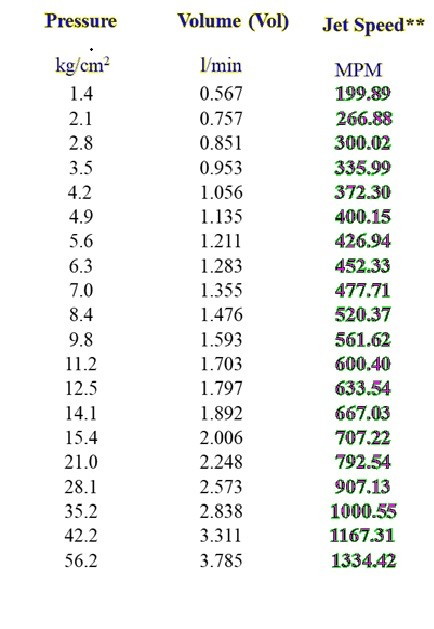
- Shower Pressure (Kg/cm2):
a. Volume (l/min), b. Jet Speed (MPM),
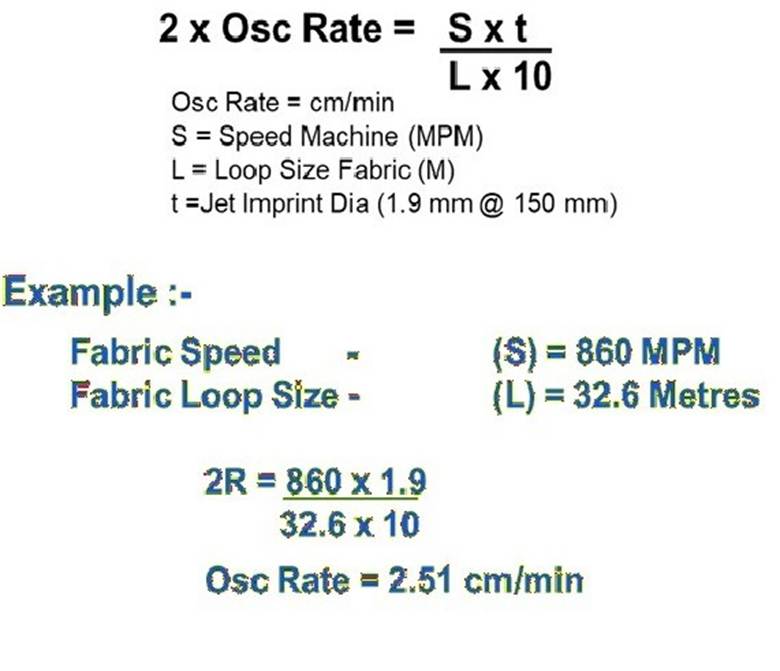
3. Oscillation Speed (cm/min) Based on:
a. Fabric Speed, b. Fabric Loop Size, c. Two Fabric Revs/1.9mm Traverse,
4. Fabric Speed/Jet Speed (MPM)
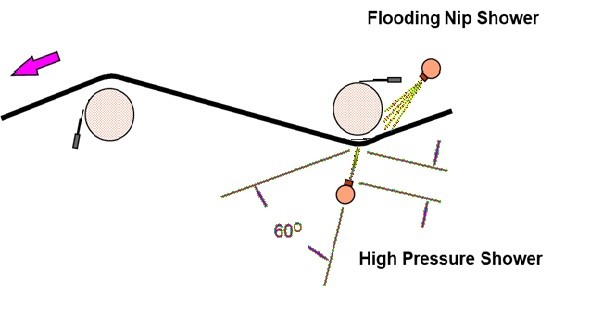
5. Angle of Impingement:
a. From Vertical,
b. With or Against the Fabric Run
6. Impact Effect (Surface Yarn Damage):
a. Impact defined I = MV,
b. Fabric speed/Jet Speed (vertical/horizontal components),
c. Mass HP Water Jet Hitting Fabric Surface (vertical/horizontal components.
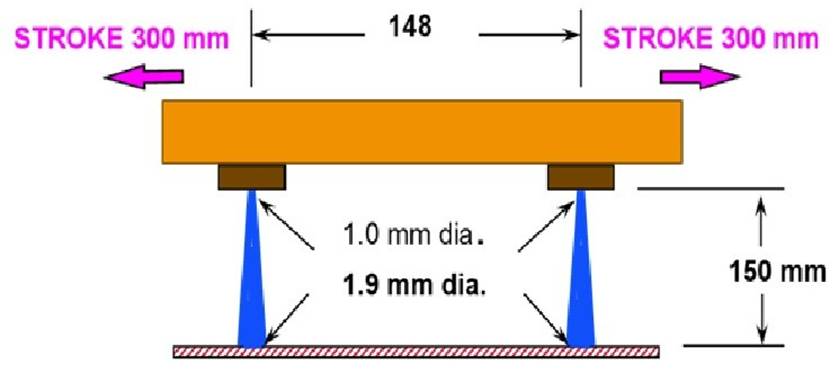
Shower Design & Nozzle Diameter:
- 300 mm Oscillation Stroke
2. Nozzle Pitch 148 mm:-
- Slightly less than 1/2 Stroke,
- Overlap,
- Improved Coverage,
3. Nozzle Diameter Accepted Standard : 1mm Diameter
4. Water Diameter versus Distance from Nozzle
Distance (mm) Jet Imprint Diameter (mm)
0/100 1.00/1.60
10/110 1.06/1.66
20/120 1.12/1.72
30/130 1.18/1.78
40/140 1.24/1.84
50/150 1.30/1.90
60/160 1.36/1.96
70/170 1.42/2.02
80/180 1.48/2.08
90/190 1.54/2.14
100/200 1.60/2.20
HP Shower Position and Location in wire section:
Oscillation Calculation for HP Shower:
Water consumption as per machine speed and shower pressure: