
What is a Hot Disperser?
A Hot Disperser (also called a Hot Dispersion System) is a specialized stock preparation unit used mainly in wastepaper recycling to improve pulp cleanliness. It is typically placed after screening and before cooking/refining to break down and disperse contaminants in the pulp stock.
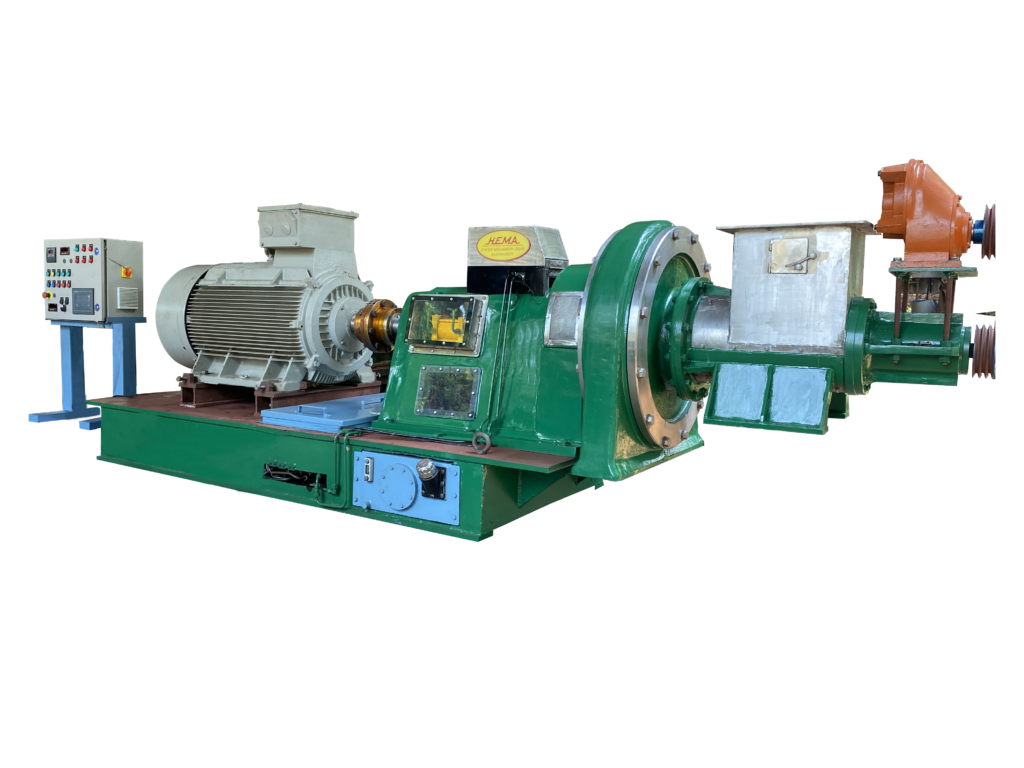
Its key job is to:
- Break up sticky contaminants
- Reduce hot melts, waxes, bitumen, ink particles
- Improve fiber treatment
“This produces a pulp that’s much cleaner and easier to use in paper machines.”
Working Principle
“The Hot Disperser operates based on mechanical energy + heat + high consistency stock”
- High Consistency Feed: Pulp stock is thickened (~30–42% consistency) using a screw press or thickener.
- Heating: The stock is heated (typically 80–110°C, sometimes up to 120°C) so that contaminants like hot melts, waxes, ink, and stickie’s soften, making them easier to break up.
- Shear & Dispersion: The heated pulp is forced through precision-machined gaps between rotating and stationary disc or kneader elements. The high shear breaks contaminants into small particles and disperses them evenly throughout the pulp.
- Release & Separation: Smaller particles and softened impurities can later be removed more effectively, and the pulp fibers are treated gently to maintain strength.
Uses & Applications
A hot disperser is used for:
Waste paper recycling: especially where contaminants like hot melts, adhesives, waxes, inks, and bitumen are present.
Improving pulp cleanliness & optical properties (better brightness and appearance).
Improve paper machine runnability: By reducing stickie’s and hot melts from recycle pulp.
Using Lower grade Furnish: Enabling use of lower-grade furnish while still producing quality paper.
Chemical Dispersion: Supporting uniform dispersion of chemicals (e.g., bleaching agents).
“Common end products benefiting from hot dispersion include writing/printing grade paper, newsprint, liner board, carton board, and tissue”
Advantages of Hot Disperser
- Improved pulp cleanliness and appearance – Removes or disperses contaminants that affect quality.
- Better runnability on paper machines – Fewer stoppages and lower maintenance.
- Allows use of cheaper waste paper furnishes – Reducing raw material cost.
- Gentle fiber treatment — Improves fiber strength and final paper quality.
- Reduces problems with stickie’s and hot melts – improving efficiency
Limitations of Hot Disperser
- High energy consumption – Heating and mechanical forces require significant power input.
- Capital cost – Expensive equipment compared with basic screening or refining alone.
- Complexity – Additional control systems (temperature, gap, speed) add operational complexity.
- Requires proper integration into stock prep line – May need auxiliary equipment like heaters, screw presses, and precision controls.
Main Suppliers & Manufacturers in India
Indian Supplier
Here are some established Indian suppliers for hot disperser systems:
- Parason Machinery
- One of the leading manufacturers of hot dispersers and complete stock preparation systems in India
- Offers Pressurized Hot Disperser Units with high-precision control.
- Samarth Paper Machinery
- Provides hot dispersion systems with accurate gap control and integrated heating.
- Suitable for recycling lines and cleans up stickie’s & hot melts after screening.
International Supplier
- ANDRITZ GROUP: Andritz is a major global pulp & paper equipment supplier that offers pressurized, compact, and ultra-high dispersing systems designed to improve pulp cleanliness and reduce stickie’s/ink/dirt
- VOITH PAPER:
- Voith is one of the world’s largest suppliers of paper manufacturing systems and also offers Compact Dispersion Systems as part of stock preparation equipment for recovered fiber.
- Voith’s systems focus on dewatering, steam heating, and efficient dispersion, often with fewer units and less floor space (e.g., Compact System).
- BELLMAR PAPER: Bellmar Offers the advanced Hot Dispersing System (HDS) — high-temperature, high-consistency dispersion for recycled fibers, with design features such as controlled dewatering, pre-heating, and precision dispersion to soften and break down contaminants.
Conclusion
A Hot Disperser is a critical unit in modern recycled fiber stock preparation systems, especially where waste paper contains high levels of stickies, hot melts, waxes, inks, and other contaminants. By combining high consistency operation, controlled heating, and intense mechanical shear, the hot disperser effectively softens and disperses impurities without damaging fiber quality.