
“Working Principle, Benefits & Role in Contaminant Control”
What is a High Density Cleaner?
A High Density Cleaner (HDC) is a centrifugal cleaning device used in stock preparation to remove heavy contaminants from pulp stock,
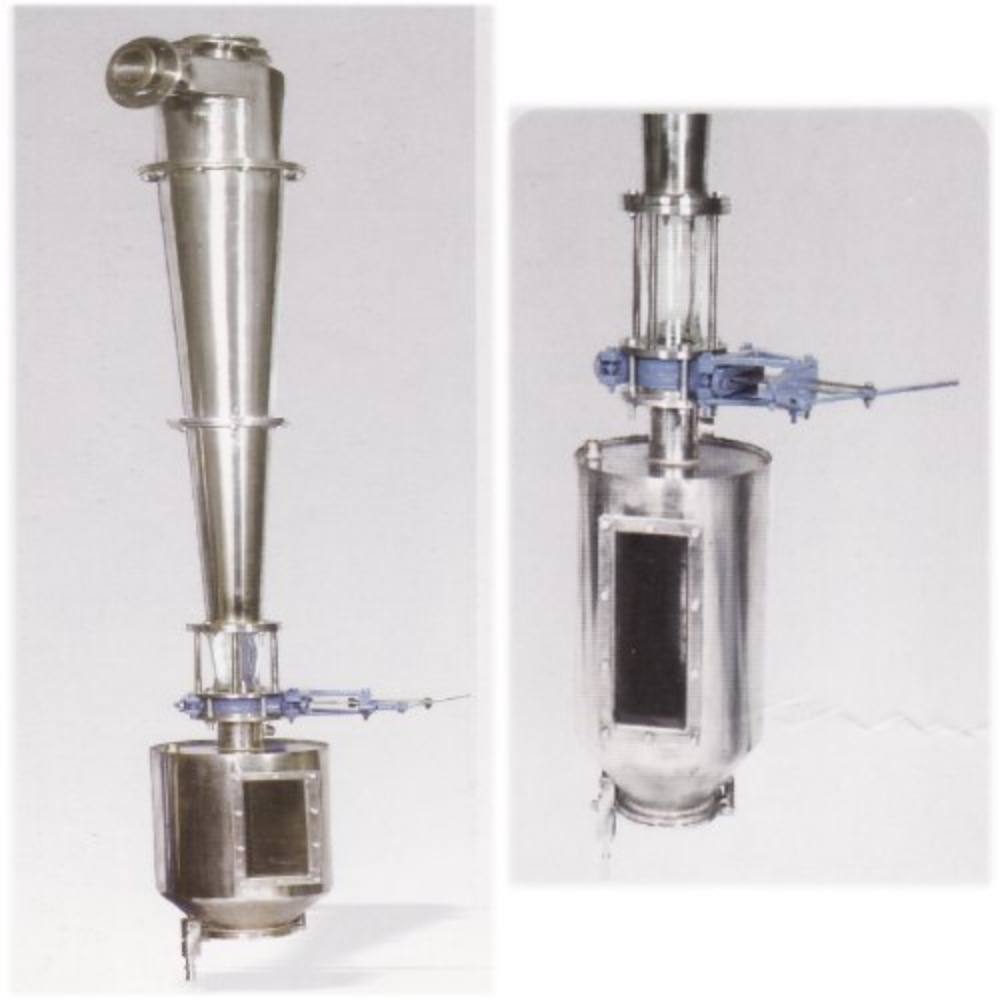
such as: Sand, Grit, Stones, Glass, Metal particles and High-density fillers or coating lumps
“In multi layer board machines—especially using recycled fiber (OCC, MWP, mixed waste) HDCs are critical for protecting refiners, screens, approach flow, and forming sections.
Working Principle
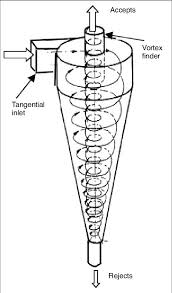
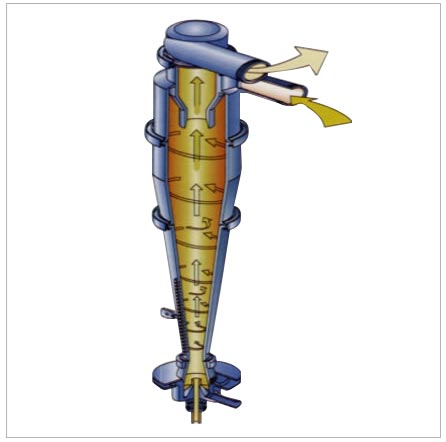
Basic Principle: Centrifugal Separation: The High Density Cleaner works on the principle that heavier particles experience greater centrifugal force than fibers when stock is rotated at high velocity.
Step-by-Step Operation
- Feed Entry
- Pulp stock enters tangentially at 0.8–1.5% consistency.
- Entry creates a strong vortex flow inside the cleaner cone.
- Centrifugal Force Generation
- Rotational motion pushes high-density particles outward the cone wall.
- Lighter fibers move toward the center vortex.
- Separation
- Heavy contaminants travel downward and exit through the reject outlet.
- Clean fiber stock flows upward and exits through the accept outlet.
- Reject Handling
- Rejects are sent to a reject tank, grit trap, or dewatering system.
“Key Feature: No moving parts → very reliable and low maintenance.”
Typical Position in Stock Preparation Line
Pulper → Coarse Screening → High Density Cleaner → Fine Screening →Low Density Cleaners → Approach Flow → Head box (Layer-wise).
“In multilayer board machines, each layer (Top / Middle / Back) may have separate HDC banks depending on furnish quality.”
Advantages of HDC
1. Excellent Removal of Heavy Contaminants : Efficiently removes sand, stones, metal, glass before they damage:
- Pressure screens
- Refiners
- Headbox and forming fabric
2. Protects Downstream Equipment
- Reduces wear and sudden failures
- Extends life of screens, pumps, and pipes
3. No Moving Parts
- Simple mechanical design
- Very low breakdown rate
- Ideal for continuous mill operation
4. Low Operating Cost
- No motors or rotating elements
- Only pumping energy required
5. Stable Performance at High Load
- Handles high contamination levels common in recycled fiber stock
Limitations of HDC
1. Fiber Loss in Rejects
- Some good fibers are lost with heavy rejects
- Requires reject recovery stages for fiber saving
2. Ineffective for Light Contaminants: Cannot remove
- Plastics
- Wax
- Stickies
- Low-density particles
3. Requires Consistent Feed Conditions: Performance drops if
- Consistency fluctuates
- Inlet pressure is unstable
4. Additional Pumping Requirement
- Needs pressure to create vortex
- Adds energy load to stock prep system
Typical Operating Parameters (Industry Practice)
| Parameter | Typical Range |
| Feed Consistency | 0.8 – 1.5% |
| Inlet Pressure | 2.5 – 4.0 bar |
| Reject Rate | 3 – 10% |
| Contaminants Removed | >1.5–2.0 specific gravity |
| Number of Stages | 1–3 (with reject recovery) |
Suppliers / Manufacturers
International Suppliers
- Valmet – High-efficiency centrifugal cleaners for OCC & board stock prep
- ANDRITZ – HD cleaner systems with multi-stage reject recovery
- Voith – CLEANER HC series for recycled fiber lines
- Toscotec – Complete cleaning systems for board machines
Indian & Regional Suppliers
- JST Machinery – High density & low density cleaners
- Samarth Paper Machinery – HD cleaners for recycled fiber systems
- Leizhan Paper Equipment – Cost-effective cleaner systems
- Shree Vishwakarma / Mohsen Engineering – Indian-made centrifugal cleaners
- Parason Machinery – Full stock preparation equipment including cleaners
Conclusion
The High Density Cleaner is an important cleaning and protection device in stock preparation, especially for recycled fiber and multilayer board machines. It uses centrifugal force to remove heavy contaminants early, which helps protect downstream equipment and improves system reliability. Although there is some fiber loss and it cannot remove light impurities,
Its simple design, no moving parts, and low operating cost make it essential when installed between coarse and fine screening. Overall, it helps ensure smooth operation and consistent pulp quality in paper and board production