
Introduction
The Pope Reel is one of the most critical sections of a paperboard machine. It is the final stage of the manufacturing process where the continuous paperboard web is wound into a parent reel (jumbo roll) before being transferred to the winder for slitting and finishing.
A well-designed and properly operated pope reel ensures excellent reel quality, smooth downstream processing, reduced waste, and improved customer satisfaction. Conversely, poor reel formation can result in defects, production losses, customer complaints, and reduced machine efficiency.
What is a Pope Reel?
A Pope Reel is the winding system located at the dry end of the paperboard machine that collects the finished paperboard web into large parent reels.
The pope reel performs three key functions:
- Winding the paperboard uniformly.
- Maintaining proper reel density from core to outer diameter.
- Producing defect-free parent reels for efficient winding and converting operations.
The term “Pope Reel” originates from the original reel design developed by Pope Manufacturing.
Position of Pope Reel in a Board Machine
Machine Flow:
Stock Preparation → Headbox → Forming Section → Press Section → Dryer Section → Size Press/Coater → Calendaring → Pope Reel → Winder → Dispatch
The pope reel is the final machine section before converting operations.
Importance of Pope Reel in Multilayer Board Manufacturing
1. Final Quality Control Point
Even if the sheet is produced perfectly in the wet end and coating sections, poor reel winding can destroy product quality.
Common reel-related defects include: 1. Reel wrinkles, 2. Telescoping, 3. Reel offset, 4. Starring, 5. Flat spots, 6. Edge damage.
2. Influences Customer Satisfaction
Customers judge reel quality by: 1. Reel appearance, 2. Edge condition, 3. Reel hardness, 4. Unwinding performance, 5. Converting efficiency
Poor reel quality often leads to customer complaints.
3. Improves Winder Efficiency
A well-formed parent reel:
- Runs smoothly in the winder
- Reduces reel change time
- Minimizes web breaks
- Increases winding speed
4. Enhances Production Efficiency
Proper pope reel operation helps:
- Increase machine speed
- Reduce waste
- Reduce broke generation
- Improve OEE (Overall Equipment Effectiveness)
Basic Working Principle of a Pope Reel
The paperboard web exits the dryer and calender section and enters the reel.
The reel spool starts winding the sheet while controlling:
- Nip pressure
- Reel tension
- Torque
- Reel diameter growth
As the reel grows, winding parameters are adjusted to maintain uniform density throughout the reel.
Main Components of a Pope Reel:
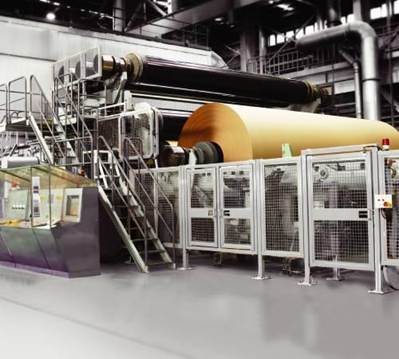
1. Reel Drum
A large rotating drum that drives the reel spool through surface contact.
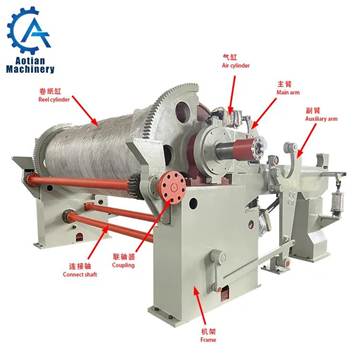
Functions:
- Drives reel rotation
- Controls winding tension
- Provides stable winding
2. Reel Spool
Steel shaft fitted with reel cores.
Functions: 1. Supports the parent reel, 2. Transfers reel to winder
3. Primary Arms
Support the spool during reel buildup.
Functions: 1. Control nip pressure, 2. Guide reel growth
4. Secondary Arms
Used during spool transfer and reel change operations.
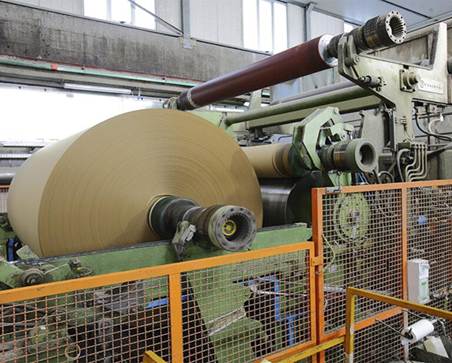
Functions: 1. Safe spool loading, 2. Smooth reel transfer
5. Reel Drive System
Provides controlled winding torque.
Can be: 1. Surface drive, 2. Canter drive, 3. Combination drive
6. Reel Control System
Modern reels use automation systems to control:
- Nip load
- Tension
- Torque
- Diameter
- Reel hardness profile
Types of Pope Reels
1. Conventional Surface Reel
Most common design.
Working
- Reel rotates against a reel drum.
- Drum drives the reel through surface contact.
Advantages: 1. Simple design, 2. Low maintenance, 3. Suitable for many grades
Limitations: 1. Higher risk of over-compression, 2. Reel hardness variation
2. Center Wind Reel
The spool is directly driven by a motor.
Advantages: 1. Better tension control, 2. Uniform reel density, 3. Improved reel quality
Applications: 1. High-quality coated board, 2. Specialty papers
3. Hybrid Reel
Combines:
- Surface drive
- Center drive
Advantages: 1. Superior reel hardness control, 2. Reduced reel defects, 3. Suitable for high-speed machines
4. Soft-Nip Reel
Uses a controlled nip loading system.
Advantages: 1. Reduced reel crushing, 2. Better bulk preservation, 3. Improved board quality
Commonly Used For
- Folding boxboard (FBB)
- White top kraft liner
- High-bulk coated board
Reel Build-Up Zones
During winding, reel density should vary throughout the reel.
Core Zone
Near the spool.
Requirements: 1. Firm enough to support outer layers, 2. Avoid core collapse
Problems: 1. Core burst, 2. Core crushing
Middle Zone
Provides structural stability.
Requirements: 1. Uniform density, 2. Consistent hardness
Outer Zone
Largest diameter region.
Requirements: 1. Controlled tension, 2. No telescoping
Problems: 1. Loose edges, 2. Reel deformation
Impact of Pope Reel on Product Quality
1. Reel Hardness
Proper hardness ensures: 1. Stable transportation, 2. Good unwinding, 3. Reduced damage
Too Hard: 1. Board crushing, 2. Starring, 3. Delamination
Too Soft: 1. Telescoping, 2. Wrinkles, 3. Edge damage
2. Caliper Consistency
Excessive winding pressure can reduce board caliper.
Results:
- Loss of bulk
- Reduced stiffness
- Customer complaints
3. Surface Quality
Poor winding can create:
- Scratches
- Marks
- Coating damage
Especially critical for coated boards.
4. Reel Profile
Good profile ensures:
- Smooth converting
- Uniform tension
- Better printability
Common Pope Reel Defects
1. Telescoping
Appearance
Reel layers shift sideways.
Causes
- Low winding tension
- Poor edge profile
- Soft reel
2. Starring
Appearance
Star-shaped cracks from reel center.
Causes
- Excessive reel hardness
- High nip pressure
3. Corrugations (Piping)
Causes
- Moisture variation
- Uneven tension
- Overwinding
- Reel Offset
Causes
- Misalignment
- Uneven winding
4. Edge Damage
Causes
- Poor trim handling
- Reel handling issues
Impact on Machine Runnability
1. Reduction in Web Breaks
Proper reel operation reduces:
- Reel change breaks
- Winder breaks
- Customer unwinding breaks
2. Higher Machine Speed
Stable winding allows:
- Increased operating speed
- Better productivity
3. Improved Winder Performance
Benefits:
- Faster winding
- Fewer reel defects
- Less broke generation
4. Lower Downtime
Proper reel formation reduces:
- Spool change issues
- Reel rejection
- Maintenance interruptions
Key Operating Parameters
1. Reel Nip Pressure
Controls reel density.
Too High:
- Hard reels
- Starring
Too Low:
- Soft reels
- Telescoping
2. Reel Tension
Controls winding stability.
Must be optimized according to:
- GSM
- Moisture
- Board grade
3. Torque Control
Ensures uniform winding.
Critical for:
- Thick board grades
- High-speed machines
4. Moisture Profile
An uneven moisture profile can cause:
- Wrinkles
- Reel deformation
- Curl
Best Practices for Multilayer Board Machines
- Maintain Uniform Moisture Profile: Target consistent moisture across machine width.
- Optimize Reel Hardness: Regularly measure hardness profile.
- Monitor Reel Defects: Track:
- Telescoping
- Starring
- Burst cores
- Edge damage
- Use High-Quality Cores: Strong cores prevent collapse during winding.
- Maintain Reel Alignment: Regular checks of:
- Spool position
- Drum alignment
- Bearing condition
- Use Automated Reel Control Systems: Benefits:
- Better reel quality
- Reduced operator dependency
- Higher productivity
Future Trends in Pope Reel Technology
Modern board machines are adopting:
- Automated hardness control
- Real-time reel quality monitoring
- Smart reel profiling
- AI-based winding optimization
- Predictive maintenance systems
These technologies help manufacturers achieve higher machine speeds while maintaining excellent reel quality.
Conclusion
The Pope Reel is much more than a winding device—it is the final quality-forming section of a multilayer board machine. Proper reel design, controlled winding parameters, and effective reel management directly influence product quality, customer satisfaction, machine efficiency, and profitability.
A well-optimized pope reel minimizes defects such as telescoping, starring, and wrinkles while improving winder performance and overall machine runnability. For modern paperboard manufacturers, mastering pope reel operation is essential for achieving world-class production performance and consistent board quality.
“The quality of the parent reel determines the quality delivered to the customer.”