
In modern papermaking, surface quality defines product value. Whether it’s premium packaging, high-end printing, or folding box board (FBB), the coating process plays a critical role.
Among all coating technologies, the Blade Coater is considered the heart of surface finishing in paper and board machines.
Introduction
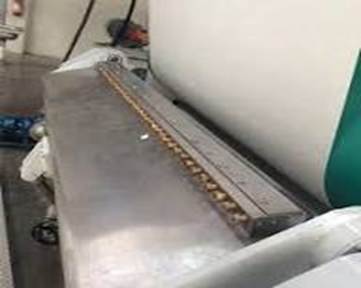
The blade coater is one of the most widely used coating systems in paper and board production. It is specifically designed to deliver highly smooth, uniform, and controlled coating layers.
In simple terms:
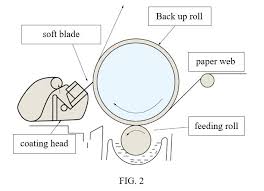
A blade coater removes excess coating using a precision blade, leaving behind a perfectly even film on the sheet surface.
This makes it ideal for producing:
- Folding Box Board (FBB)
- Solid Bleached Sulfate (SBS)
- High-quality coated papers
- Premium packaging boards
Purpose of Blade Coating
The primary goal of blade coating is to enhance surface properties that directly impact print and visual quality.
It helps to:
- Improve surface smoothness
- Enhance printability and ink holdout
- Increase brightness and gloss
- Ensure uniform coating thickness
- Improve overall appearance
Working Principle
The blade coater operates on a simple yet highly effective concept:
- Coating color is applied to the sheet (either flooded or pre-metered)
- A flexible blade scrapes off excess coating
- A thin, controlled layer remains on the surface
This process is known as metering by blade.
Key Mechanism
- Hydrodynamic pressure develops in front of the blade
- The blade precisely controls the final coat weight
- Excess coating is recirculated back into the system
Types of Blade Coaters
Different blade coater designs are used depending on machine speed, product quality, and application.
- Trailing Blade Coater
The most commonly used type, where the blade follows the coating application point.
Advantages:
- Excellent smoothness
- Reliable coat weight control
2. Bent Blade Coater
The blade is slightly bent to increase loading pressure.
Advantages:
- Higher metering force
- Better performance at high speeds
3. Short Dwell Coater
Provides minimal contact time between coating and blade.
Advantages:
- Reduced penetration into the base sheet
- Improved surface coating quality
Ideal for high-speed machines
4. Jet Application Blade Coater
Coating is applied via a pressurized jet before metering.
Advantages:
- Highly uniform application
- Suitable for premium grades
Coating Formulation (Critical Factor)
The success of blade coating depends heavily on the coating recipe.
Typical Composition:
- Pigments (60–70%)
- Clay (kaolin)
- Calcium carbonate (GCC/PCC)
Provide smoothness and brightness
2. Binders (10–20%)
- SB Latex
- Starch
Provide strength and adhesion
3. Additives (1–5%)
- Dispersants
- Defoamers
- Lubricants
- Optical Brightening Agents (OBA)
4. Water
- Controls viscosity and flow
Properties of Coating Solution
- Solids: 55–65%
- Viscosity: 800–1500 cps
- pH: 7–9
- Water Retention: 180 to 210 gm/m2
Key Operating Parameters
| Parameter | Typical Range |
| Coat Weight | 8–25 GSM |
| Machine Speed | 300–1200 m/min |
| Blade Pressure | Adjustable |
| Solids Content | 55–65% |
| Drying Temperature | 100–160°C |
Blade Types & Materials
- Materials
- Carbon steel
- Stainless steel
- Ceramic-coated blades
2. Blade Profiles
- Straight
- Bevel
- Rounded tip
Selection depends on:
- Required coat weight
- Machine speed
- Desired surface quality
Advantages of Blade Coater
- Excellent surface smoothness
- Precise coat weight control
- Superior printing performance
- Suitable for high-speed operations
- Uniform coating distribution
Disadvantages of Blade Coater
- Higher capital investment
- Frequent blade replacement due to wear
- Highly sensitive to base sheet quality
- Risk of defects if not properly controlled
Common Defects & Troubleshooting
- Streaks
Cause: Blade damage or dirt particles
Solution: Replace blade and improve filtration
2. Scratches
Cause: Hard particles under blade
Solution: Clean system and check coating quality
3. Orange Peel Effect
Cause: Poor coating flow
Solution: Adjust viscosity and formulation
4. Blade Lines
Cause: Uneven blade pressure
Solution: Optimize blade loading system
5. Picking
Cause: Weak base sheet
Solution: Improve size press treatment or increase binder
6. Drying After Blade Coating
Drying is a critical step to maintain coating quality and avoid defects.
Common Methods:
- IR dryers (initial drying)
- Hot air dryers
- Cylinder dryers
Proper drying ensures:
- Crack-free coating
- Smooth and uniform surface
Practical Industry Tips
- Base Sheet Quality is Critical
Blade coating cannot compensate for:
- Poor formation
- Uneven GSM
2. Balance Your Formulation
- More pigment → better printability
- More binder → better strength
3. Blade Management
- Regular blade replacement
- Maintain correct blade angle and pressure
4. Filtration is Essential
- Prevents streaks and scratches
- Ensures consistent coating quality
Application in Multilayer Board
Blade coating is primarily applied on the top layer (printing side) of multilayer board.
Typical Structure:
- Top Layer: Virgin pulp + coating
- Middle Layer: BCTMP / OCC (bulk and stiffness)
- Bottom Layer: Virgin pulp + coating
This structure delivers:
- Premium surface finish
- High print quality
- Cost efficiency
Industry Trends
- Double and triple blade coating systems
- Ultra-high-speed coating (>1000 m/min)
- Functional coatings such as:
- Barrier coatings
- Plastic replacement solutions
- Automation and AI-based process control
Conclusion
Blade coater is a precision coating technology which Essential for high-quality paper and board
It Requires: Strong base sheet, Optimized formulation, Skilled operation
The blade coater is the core of surface quality in modern papermaking. When optimized properly,
It can: Enhance product value, improve print performance, Increase profitability