
Introduction
In the paper and paperboard manufacturing process, the drying section is one of the most critical stages, and the dryer cylinder is the core equipment responsible for removing moisture from the sheet. After the press section removes water mechanically, the remaining moisture must be evaporated through heat. This is where dryer cylinders play a vital role.
In a typical multi-layer board machine, the sheet enters the drying section with around 45–50% dryness and leaves with approximately 92–94% dryness. This large amount of water removal is achieved through a series of steam-heated dryer cylinders working together with ventilation and fabric systems.
What is a Dryer Cylinder?
A dryer cylinder is a large rotating metal cylinder heated internally by steam. The wet paperboard sheet passes over the hot surface of the cylinder, allowing heat to transfer into the sheet and evaporate moisture.
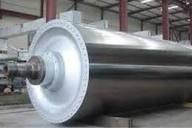
These cylinders are arranged in multiple groups in the drying section of the machine. Each cylinder contributes to gradually reducing the moisture content of the board until the required dryness is achieved.
“Dryer cylinders are typically made from high-quality cast iron due to its excellent thermal conductivity and mechanical strength.”
Working Principle of Dryer Cylinders:
The operation of a dryer cylinder is based on the principle of steam condensation and heat transfer.
The process works as follows:
1. High-pressure steam enters the dryer cylinder through a rotary steam joint.
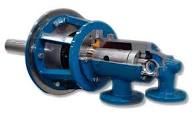
2. The steam spreads inside the cylinder and contacts the inner surface of the shell.
3. Steam condenses into water, releasing a large amount of heat known as latent heat.
4. This heat transfers through the metal shell to the outer surface of the cylinder.
5. The wet paperboard sheet comes into contact with the hot cylinder surface.
6. Moisture inside the sheet evaporates due to the heat.
7. The condensed steam (condensate) is removed from the cylinder through a siphon system.
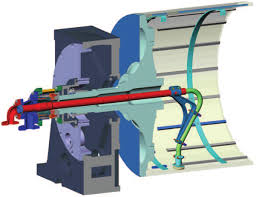
“This continuous heat transfer process ensures efficient drying as the sheet travels across multiple cylinders in the dryer section.”
Construction of a Dryer Cylinder:
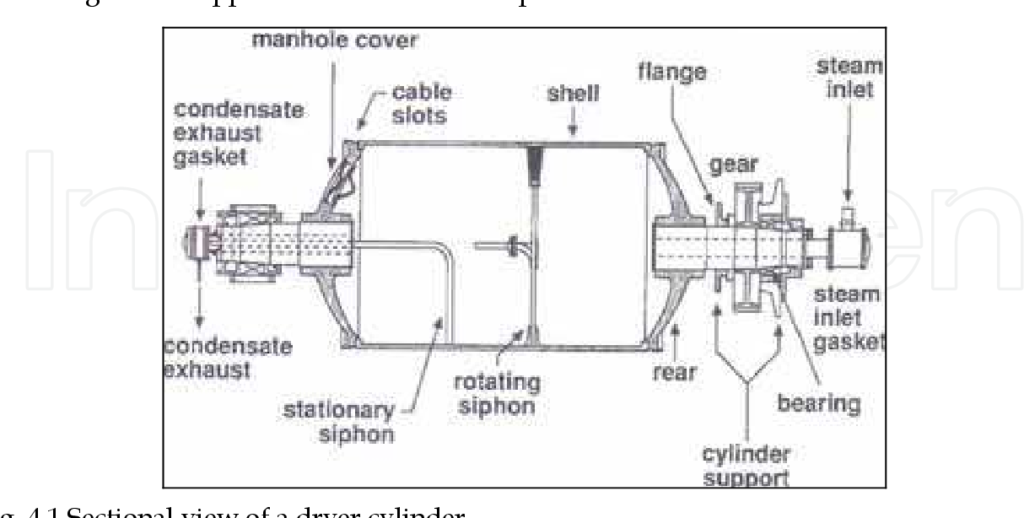
A dryer cylinder consists of several key components that work together to ensure efficient heat transfer and stable operation.
-
- Cylinder Shell
The shell forms the main body of the dryer cylinder and is responsible for transferring heat to the sheet.
Typical characteristics include:
a. Material: Cast iron
b. Diameter: 1500–1800 mm
c. Surface temperature: 70–150°C
d. Shell thickness: 25–35 mm
“The smooth surface of the shell ensures good contact with the paperboard sheet.”
2. End Heads
End heads are installed at both ends of the cylinder to seal the structure and support the journals. They must withstand high internal pressure from the steam.
3. Journals
Journals are the shafts attached to both sides of the dryer cylinder. They allow the cylinder to rotate and connect it to the machine drive and bearing systems.
4. Rotary Steam Joint
The rotary joint allows steam to enter the rotating cylinder and condensate to exit without interrupting rotation. Proper sealing in this system is essential to prevent steam leakage.
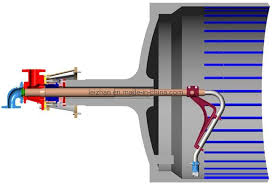
5. Siphon System
When steam condenses inside the dryer cylinder, the resulting condensate must be removed efficiently to maintain good heat transfer.
There are two common types of siphon systems:
a. Rotary Siphon:
Rotates with the cylinder and is commonly used in medium-speed machines.

b. Stationary Siphon:
Fixed inside the cylinder and commonly used in high-speed modern board machines due to better condensate removal efficiency.
6. Turbulators
Turbulators are internal devices that improve heat transfer by increasing turbulence inside the cylinder. They help prevent condensate buildup and enhance drying efficiency.
Heat Transfer Mechanism in Dryer Cylinders
Drying occurs through three main stages of heat transfer.
1. Steam Condensation: Steam condenses on the inner surface of the cylinder shell and releases latent heat.
2. Heat Conduction: Heat moves through the cylinder shell from the inside surface to the outer surface.
3. Heat Transfer to the Paper Sheet: The paperboard sheet absorbs the heat, causing water within the fibers to evaporate.
Operating Parameters of Dryer Cylinders:
Several operating parameters influence the performance of dryer cylinders.
1. Steam Pressure
Steam pressure determines the temperature of the dryer cylinder.
Typical ranges in board machines:
a. Pre-dryer section: 3–6 bar
b. Size press dryer: 3–5 bar
c. After dryer section: 3–5 bar
“Higher steam pressure increases drying capacity.”
2. Cylinder Surface Temperature
The surface temperature of dryer cylinders typically ranges
a. Between: 70°C and 150°C
“Temperature depending on steam pressure and operating conditions.”
3. Machine Speed
Higher machine speeds reduce the contact time between the sheet and the dryer cylinder.
Therefore, efficient heat transfer and condensate removal become even more important at higher speeds.
4. Wrap Angle
The wrap angle is the portion of the cylinder surface that the sheet contacts.
Typical wrap angles range between 180° and 210°.
“A larger wrap angle increases heat transfer and improves drying efficiency.”
Common Problems with Dryer Cylinders:
Despite their simple design, dryer cylinders can face several operational challenges.
1. Poor Heat Transfer
This may occur due to:
a. Condensate accumulation
b. Low steam pressure
c. Poor steam distribution
2. Cylinder Vibration
Vibration can result from:
a. Condensate buildup
b. Mechanical imbalance
c. Internal damage
3. Uneven Drying
Uneven drying may be caused by:
a. Steam pressure variation
b. Dirty cylinder surfaces
c. Uneven dryer fabric tension
4. Steam Leakage
Steam leakage typically occurs due to worn rotary joints or damaged seals.
Maintenance of Dryer Cylinders:
Regular maintenance ensures efficient drying and longer equipment life.
-
- Routine Maintenance
Operators should regularly:
a. Inspect rotary steam joints
b. Check siphon pipes
c. Monitor steam pressure
d. Clean cylinder surfaces
e. Check bearings and lubrication systems
- Routine Maintenance
2. Preventive Maintenance
Advanced monitoring techniques include:
a. Vibration analysis
b. Thermal inspection
c. Condensate flow monitoring
d. Cylinder balancing checks
“These practices help detect issues before they affect machine performance.”
Importance of Dryer Cylinders in Board Quality:
The performance of dryer cylinders directly influences several key product quality parameters.
1. Moisture Uniformity
Proper drying ensures consistent moisture across the sheet.
2. Board Strength
Correct drying improves fiber bonding and mechanical strength.
3. Dimensional Stability
Balanced drying reduces defects such as curl, warping, and moisture variation.
Conclusion
Dryer cylinders are the primary heat transfer equipment in the drying section of a paperboard machine. By transferring heat from steam to the paperboard sheet, they remove the remaining moisture and bring the sheet to the required final dryness.
Efficient operation of dryer cylinders depends on proper control of steam pressure, condensate removal, cylinder temperature, and sheet contact conditions. With proper design, operation, and maintenance, dryer cylinders play a vital role in
improving board quality, production efficiency, and energy
performance